
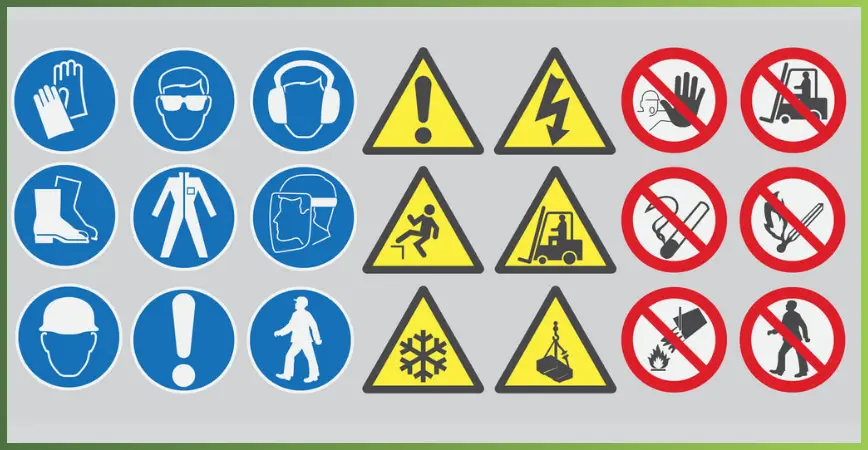
Safety symbols are signs that warn people about possible dangers. They help prevent accidents at work, school, or even at home.
Everyone should understand safety symbols because they protect lives and reduce risks. Whether you are a student, worker, or visitor, recognizing these symbols can help you stay safe.
In this blog, we’ll explain what safety symbols mean, their types, and why they are important.
What Are Safety Symbols?
Safety symbols are visual signs that tell us about hazards, warnings, or safe practices.
They use simple pictures, colors, and shapes to quickly deliver messages — even if you don’t read the language.
For example:
- A red circle often means danger or prohibition.
- A yellow triangle shows caution.
- A green rectangle shows safety or first aid.
These symbols are used in factories, schools, hospitals, offices, and public places.
Importance of Safety Symbols
Here’s why safety symbols are so important:
- Prevent Accidents – They warn people before something dangerous happens.
- Save Lives – Quick understanding of a sign can stop serious injury.
- Legal Requirement – Many safety laws, including OSHA standards, require them.
- Easy Communication – Symbols can be understood by anyone, anywhere.
- Build Awareness – They remind everyone to stay alert and careful.
Safety symbols create a safer environment for workers, students, and visitors.
Fire and Home Safety Tip
Visit Green Tech Solutions to learn how to make your home safer with fire safety systems, alarms, and preventive measures.

Types of Safety Symbols
Safety symbols are grouped by color and purpose. Here are the main types:
Type | Color | Meaning | Example Symbol |
Prohibition Signs | Red | Do not do something | No Smoking |
Warning Signs | Yellow | Be careful / Caution | Flammable Material |
Mandatory Signs | Blue | Must do something | Wear Safety Helmet |
Emergency Information Signs | Green | Safe condition / First aid | Exit or First Aid |
Fire Safety Signs | Red | Fire equipment / Alarm | Fire Extinguisher |
These symbols can be seen everywhere — from workplaces to schools — reminding us how to act safely.
7 Common Safety Symbols and Their Meanings
Here are 7 important safety symbols you should know:
- Fire Extinguisher – Shows where a fire extinguisher is located.
- No Smoking – Reminds people not to smoke in specific areas.
- First Aid – Indicates the location of medical help or a first aid box.
- High Voltage – Warns about the risk of electric shock.
- Wear Safety Helmet – Tells workers to protect their head.
- Slippery Surface – Warns about floors that might cause falls.
- Emergency Exit – Shows the direction to escape during emergencies.

10 Safety Signs and Their Meanings
Safety Sign | Meaning |
Danger – Flammable | Keep away from fire |
Electrical Hazard | Risk of electric shock |
No Entry | Area restricted |
Caution – Wet Floor | Risk of slipping |
Fire Alarm | Location of alarm system |
First Aid | Medical help available |
Safety Glasses Required | Protect your eyes |
Emergency Exit | Safe way to leave building |
Corrosive | Chemical can burn skin |
Toxic | Substance is poisonous |
These safety symbols with names are important in every building and workplace.
Safety Signs and Symbols for Students
Students must also learn about safety signs and symbols.
In schools and labs, these signs help prevent accidents during experiments or practical work. Examples include:
- No Food or Drink in labs.
- Wear Safety Goggles during experiments.
- Caution – Hot Surface near burners.
Learning these early helps students become more aware of safety in daily life.
FAQs About Safety Symbols
The 7 main safety symbols include:
- Fire Extinguisher
- No Smoking
- First Aid
- High Voltage
- Slippery Surface
- Wear Helmet
- Emergency Exit
Five key safety symbols are:
- Danger
- Warning
- Prohibition
- Mandatory
- Emergency
Symbols of safety are pictures that warn people about hazards, guide them to safety, or remind them of rules. They are universal and easy to understand.
OSHA safety signs use colors and shapes to show levels of danger:
- Red means danger.
- Yellow means caution.
- Blue means you must follow an instruction.
- Green means safety or first aid.
Conclusion
Safety symbols are simple but powerful tools. They save lives, prevent accidents, and promote a culture of safety.
By learning and following safety signs and symbols, everyone — workers, students, and families can stay alert and protected.
Remember, safety starts with awareness. Recognize the signs, follow the instructions, and keep your surroundings safe.
For more safety insights and home protection tips, visit Green Tech Solutions.
