
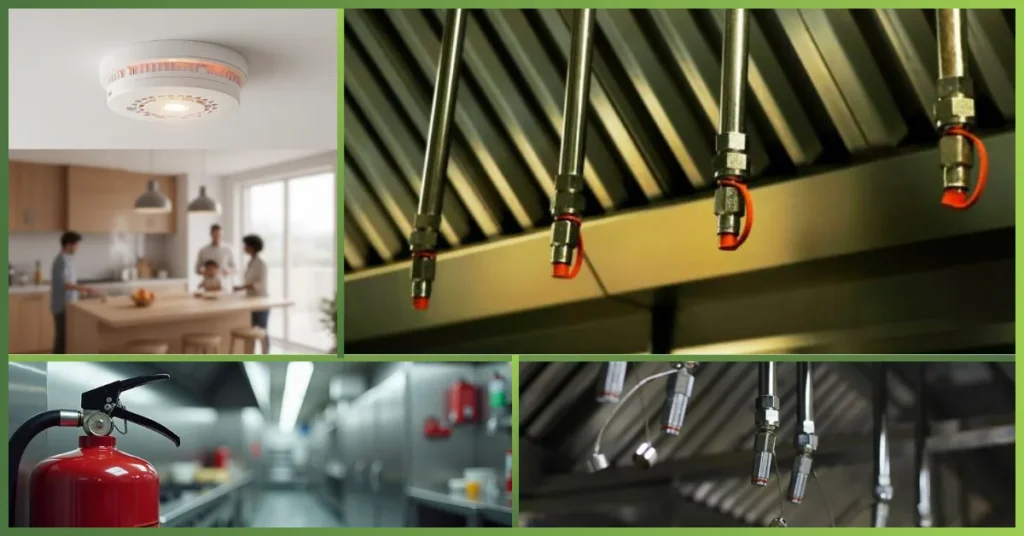
Kitchen safety is a critical concern for homes, restaurants, hotels, hospitals, and food production facilities across Pakistan. A kitchen combines fire, gas, electricity, sharp tools, and heat in one confined space.
Without proper safety measures, even a small mistake can lead to injuries, fires, or serious property damage.
This guide explains essential kitchen safety rules, common hazards, and prevention strategies, with expert insights from GreenTech, a Pakistani brand offering professional fire safety equipment supply and maintenance services.
What does kitchen safety mean?
Kitchen fire safety involves taking steps to prevent fires and knowing how to respond quickly and safely if a fire occurs in the kitchen.
Why Kitchen Safety is Important
Kitchens are among the most common sources of fire incidents. In commercial environments, continuous cooking, grease buildup, and high temperatures increase the risk even further. Many fires escalate because early detection systems are missing or poorly maintained.
Installing a reliable fire alarm system in Pakistan allows early detection of smoke or heat, helping prevent minor incidents from turning into disasters.
Trust GreenTech Pakistan for reliable fire protection solutions
From fire alarms to suppression systems, the right equipment saves lives. Install certified, regulation-compliant kitchen fire safety systems.

Common Kitchen Hazards You Should Know
Hazard Type | Common Causes | Potential Risks | Prevention Measures |
Fire Hazards | Unattended cooking, oil overheating, gas leaks | Kitchen fires, property damage, injuries | Fire alarms, hood suppression systems, staff training |
Electrical Hazards | Faulty wiring, overloaded sockets | Electric shocks, electrical fires | Proper earthing, certified wiring, routine inspections |
Slip Hazards | Wet or greasy floors | Falls, fractures, head injuries | Non-slip mats, immediate spill cleanup |
Cut Hazards | Sharp knives, broken glass | Deep cuts, bleeding | Proper knife storage, safety gloves |
Burn Hazards | Hot oil, steam, heated surfaces | Skin burns, scalding | Heat-resistant gloves, safe handling practices |
Fire Hazards
Kitchen fires are commonly caused by overheated oil, unattended cooking, gas leaks, and grease accumulation in exhaust hoods.
Commercial kitchens must be protected with automatic solutions, such as a hood suppression system in Pakistan, which is specifically designed to control grease fires. For broader protection, a certified fire suppression system in Pakistan is essential.
Electrical Hazards
Faulty wiring, overloaded sockets, and improper grounding can result in electric shocks or fires. Professional earthing and lightning protection systems in Pakistan help reduce electrical hazards in both residential and commercial kitchens.
Slip, Cut, and Burn Hazards
Wet floors, sharp knives, hot surfaces, and boiling liquids are daily risks. Proper housekeeping, staff training, and layout planning significantly reduce these dangers.
Using the right protective gear is essential in any kitchen. Learn more about different types and uses of rubber gloves for kitchen safety.
10 Safety Precautions in the Kitchen
- Never leave cooking unattended
- Keep flammable items away from open flames
- Turn off gas supply after cooking
- Clean grease from hoods and surfaces regularly
- Keep kitchen floors dry and non-slip
- Avoid overloading electrical outlets
- Store knives and sharp tools safely
- Ensure proper ventilation
- Install appropriate fire extinguishers
- Conduct routine safety inspections
20 Kitchen Safety Rules (Essential Checklist)
Following these 20 kitchen safety rules helps prevent most accidents:
- Keep fire extinguishers within reach
- Never pour water on oil or grease fires
- Inspect gas pipelines regularly
- Clean exhaust hoods to prevent grease buildup
- Restrict unauthorized access to cooking areas
- Use non-slip mats
- Avoid damaged electrical appliances
- Turn pot handles inward
- Store chemicals separately from food
- Wear proper kitchen footwear
- Avoid loose clothing while cooking
- Label gas shut-off valves clearly
- Keep emergency exits accessible
- Train staff for fire emergencies
- Install smoke and heat detectors
- Maintain alarm systems regularly
- Use approved fire suppression systems
- Secure LPG cylinders properly
- Report faulty equipment immediately
- Display a kitchen safety poster
Using standardized symbols and warning signs further improves hazard awareness and emergency response.
Kitchen Safety Rules for Students
Teaching kitchen safety rules for students is vital in schools, colleges, and training institutes. Students should learn safe appliance use, basic fire prevention, and evacuation procedures to build long-term safety habits.
Kitchen Fire Detection and Alarm Systems
Early fire detection is one of the most effective safety measures. Depending on facility size, wireless fire alarm systems are ideal for flexible layouts, while hybrid fire alarm systems provide enhanced reliability for larger kitchens.
For homes, installing a fire alarm system for houses ensures families receive immediate alerts during emergencies.
Importance of Fire Safety Equipment Maintenance
Fire safety equipment must work perfectly during emergencies. Regular fire safety equipment maintenance ensures fire extinguishers, alarms, suppression systems, fire pumps, and hydrants remain fully operational.
Fire Safety Laws for Kitchens in Pakistan
Commercial kitchens must comply with local regulations covering alarms, extinguishers, exits, and inspections. Understanding fire safety laws in Pakistan helps businesses remain compliant while protecting staff and customers.
Home vs Commercial Kitchen Safety
Residential kitchens benefit from proper home fire safety planning, including smoke detectors and extinguishers. Commercial kitchens require advanced systems such as fire sprinklers, fire hydrants, and fire pumps to manage higher risks.
Kitchen Fire Detection & Suppression Systems
System Type | Best For | Key Benefit |
Smoke Detectors | Homes, small kitchens | Early smoke detection |
Heat Detectors | Commercial kitchens | Works in high-smoke areas |
Hood Suppression System | Restaurants, hotels | Controls grease fires instantly |
Wireless Fire Alarms | Flexible layouts | Easy installation |
Hybrid Fire Alarm Systems | Large facilities | High reliability & coverage |
Fire Safety Equipment Maintenance Schedule
Equipment | Inspection Frequency | Why It’s Important |
Fire Extinguishers | Monthly | Ensure pressure & readiness |
Fire Alarm Systems | Quarterly | Reliable early detection |
Hood Suppression Systems | Bi-annually | Effective grease fire control |
Fire Pumps & Hydrants | Annually | Maintain water pressure |
Emergency Lights | Quarterly | Safe evacuation |
FAQs: Kitchen Safety
Kitchen security involves preventive measures that protect people, equipment, and property from accidents and fire hazards.
Fire safety, electrical safety, personal safety, and chemical/hygiene safety.
Fire, electricity, slips and falls, sharp tools, and hazardous chemicals.
They include fire control, safe appliance use, dry floors, ventilation, emergency planning, and regular inspections.
Conclusion
Kitchen safety is not just about rules—it is about prevention, preparedness, and proper systems. By following kitchen safety guidelines, installing reliable fire detection and suppression systems, and maintaining equipment regularly, both homes and businesses can significantly reduce risks.
With certified expertise, compliance-focused solutions, and nationwide service coverage, GreenTech remains a trusted partner for kitchen fire safety in Pakistan.
Protect your kitchen before a small risk becomes a major loss.
Get expert kitchen fire safety assessment and compliance guidance.

