
Not every fire extinguisher puts out every fire. Use the wrong one—for instance, water, on an electrical fire, and you can make things worse, not better.
That’s what “class” means in fire safety: it’s a system that matches the extinguisher’s agent to the type of fuel that’s burning. Understanding what is a fire extinguisher class helps you identify the right extinguisher for different types of fires and use it safely.
This guide walks through every fire extinguisher class and type used in Pakistan today, how to read the labels, how to pick the right one for your home, office, kitchen, or facility, and where GreenTech’s fire extinguisher services in Pakistan fit into keeping it all compliant.
What is a Fire Extinguisher Class?
A fire extinguisher class is a rating that tells you which type of fuel or fire hazard the extinguisher is designed to fight. It’s printed directly on the extinguisher label as a letter—A, B, C, D, or K—sometimes alongside a number that indicates how much fire it can handle.
Classification groups fires by what’s burning: solids, liquids, gases, metals, or cooking because each of those needs a different extinguishing method. Water works on wood; it can spread a grease fire. That’s the entire logic behind the classification system.
The best fire extinguisher depends on the fire class. ABC dry powder is commonly used for general Class A, B, and C risks; CO₂ is commonly used around suitable electrical equipment; wet chemical is designed for cooking-oil fires; and specialist Class D powder is required for combustible-metal fires. Always check the extinguisher’s label and rating before use.
“Category” and “class” are often used interchangeably in everyday conversation, though technically the class refers to the fire type (A, B, C, D, K), while the category can also refer to the extinguishing agent itself—water, foam, CO₂, dry powder, or wet chemical.
Why are there Different Classes?
Because fires behave differently depending on the fuel. A wood fire, a petrol fire, an electrical panel fire, and a cooking oil fire all need to be starved of oxygen or cooled in different ways—one extinguishing agent can’t safely do all of it.
What Are Class A, B, C, D, and K Fires?
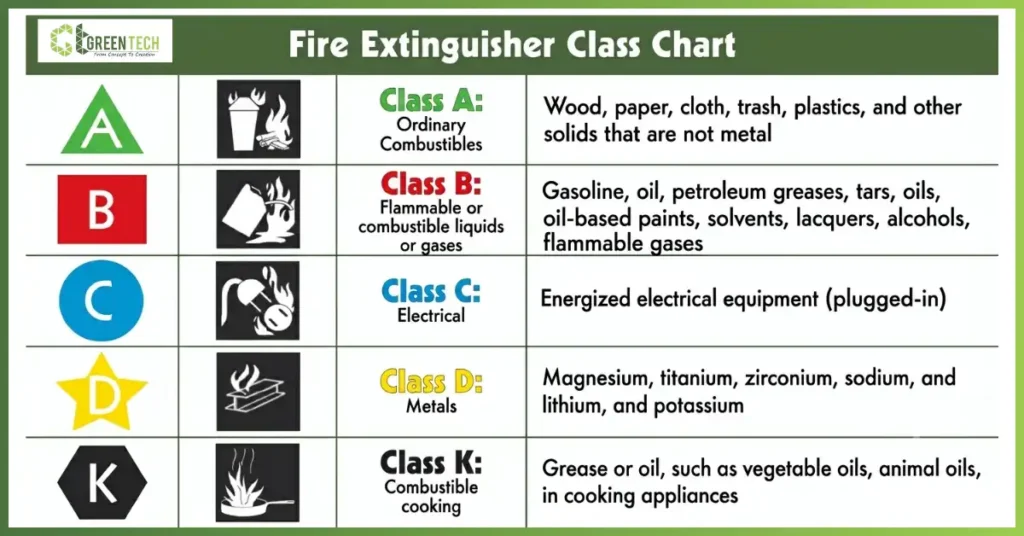
There are five widely recognized fire classes: A, B, C, D, and K (also written as F in some international standards).
Class A Fires
Ordinary combustibles include wood, paper, cardboard, cloth, rubber, and most plastics. The most common fire class in homes, schools, offices, and warehouses across Pakistan.
Class B Fires
Flammable and combustible liquids: petrol, diesel, kerosene, paints, solvents, and oils. Common in workshops, fuel stations, and factories.
Class C Fires
Fires involving live electrical equipment: wiring, panels, generators, transformers, and appliances. Extremely common in Pakistani commercial buildings due to overloaded circuits and aging wiring.
Class D Fires
Combustible metals: magnesium, titanium, sodium, potassium, and aluminum dust. Rare outside industrial and metalworking environments, but very dangerous when they occur.
Class K/F Fires
Cooking oils, fats, and grease: the fire class specific to commercial kitchens, restaurants, and hotel catering operations.
What Does Each Fire Class Cover?
Class | Fuel Source | Typical Setting |
A | Wood, paper, cloth, plastics | Homes, offices, schools |
B | Petrol, diesel, oils, solvents | Workshops, fuel stations |
C | Live electrical equipment | Offices, factories, data rooms |
D | Combustible metals | Metalworking, manufacturing |
K/F | Cooking oils and fats | Commercial kitchens, hotels |
Not sure which class applies to your building?
A mismatched extinguisher is one of the most common fire-safety compliance gaps GreenTech finds during site audits in Pakistan.

What Are the Different Types of Fire Extinguishers?
Each fire class is matched to one or more extinguisher types, defined by the agent inside the cylinder.
1. Water Fire Extinguishers
Water type fire extinguishers cool the fuel below its ignition point. They’re the simplest, most affordable option but also the most limited.
Class A Uses
Wood, paper, textile, and general combustible fires in homes, schools, and offices.
When Should You Not Use a Water Extinguisher?
Never use water on electrical fires (risk of electrocution) or flammable-liquid fires (water can spread burning liquid rather than extinguish it).
2. Foam Fire Extinguishers
Foam fire extinguishers smother the fire and form a cooling film over the fuel surface, making them effective on both solids and liquids.
Class B Uses
Petrol, diesel, and other flammable liquid fires, plus general Class A combustibles.
Suitable Applications
Fuel storage areas, generator rooms, warehouses, and mixed-risk commercial premises.
3. Dry Powder Fire Extinguishers
Dry powder fire extinguishers interrupt the chemical reaction of combustion and are the most versatile type available in Pakistan.
What Fires Can Dry Powder Extinguishers Handle?
Class A, B, and C fires—solids, liquids, and electrical equipment—make DCP the default choice for most Pakistani businesses.
ABC Dry Powder Fire Extinguishers
“ABC” on the label means the unit is rated across all three of those classes. It’s the most commonly installed extinguisher type in factories, offices, and retail spaces nationwide and is available in a full range of DCP sizes from 2kg portable units up to 50kg trolley-mounted cylinders.
4. Carbon Dioxide (CO₂) Fire Extinguishers
CO₂ for Electrical Fires
Because CO₂ doesn’t conduct electricity and leaves no chemical residue, it’s the preferred choice for server rooms, electrical panels, and sensitive equipment.
Where Should CO₂ Extinguishers Be Used?
Electrical rooms, data centers, labs, and generator enclosures—anywhere a powder or foam residue would damage equipment.
5. Wet Chemical Fire Extinguishers
Wet chemical fire extinguishers are purpose-built for cooking fires and work by cooling the oil and forming a soap-like layer (saponification) that stops re-ignition.
Class K Details
Designed specifically for high-temperature cooking oil and fat fires that other agents can’t safely handle.
Wet Chemical for Commercial Kitchens
Mandatory in most commercial kitchen fire-safety plans in Pakistan, typically paired with a hood suppression system for full kitchen coverage.
6. Class D Fire Extinguishers
Specialist dry powder extinguishers designed purely for combustible metal fires never use a standard ABC or CO₂ unit on a metal fire, as it can react violently.
Class D Specifications
Use a specialized extinguishing powder (such as graphite- or sodium chloride-based agents) applied by trained personnel only.
When Are Class D Required?
Metal fabrication shops, foundries, and any facility that machines or stores magnesium, titanium, or aluminum in fine particulate form.
What Are the 4, 5, and 7 Types of Fire Extinguishers?
Count | Types Included | Classes Covered |
4 Types | Water, Foam, Dry Powder (DCP), CO₂ | Class A, B, C |
5 Types | Water, Foam, Dry Powder (DCP), CO₂, Wet Chemical | Class A, B, C, K (kitchen fires) |
7 Types | Water, Foam, Dry Powder (DCP), CO₂, Wet Chemical, Class D Powder, Halotron/Clean Agent (and/or fire extinguisher balls or automatic units) | Class A, B, C, K, D (combustible metals), and specialised/self-activating applications |
How Are Fire Extinguishers Classified?
Manufacturers test each extinguisher against standardized fire scenarios (per NFPA, PSQCA, or equivalent standards) and assign it a class and numeric rating based on performance.
What Is the Purpose of a Fire Extinguisher Class?
To prevent the wrong agent being used on the wrong fire—a mismatch that can range from ineffective to actively dangerous.
Fire Extinguisher Classes and Types Chart
Getting the right fire extinguisher is important. Following are the different classes of extinguishers:
Class | Fire Type | Recommended Extinguisher | Avoid |
A | Wood, paper, textiles | Water, Foam, ABC Powder | — |
B | Flammable liquids | Foam, CO₂, ABC Powder | Water |
C | Electrical equipment | CO₂, ABC Powder | Water, Foam |
D | Combustible metals | Specialist Class D Powder | Water, standard powder, CO₂ |
K/F | Cooking oils and fats | Wet Chemical | Water, standard powder |
What Do Fire Extinguisher Colors Mean?
Colour Band | Agent | Class |
Red | Water | A |
Cream | Foam | A, B |
Black | CO₂ | B, C (electrical) |
Blue | Dry Powder (DCP) | A, B, C |
White | Water Mist | Multi-purpose |
Yellow | Wet Chemical | K |
Fire Extinguisher Ratings
A numeric value (e.g., 13A, 55B) printed next to the class letter that indicates the extinguisher’s firefighting capacity higher numbers mean it can handle a larger fire of that class.
Where Is the Rating Displayed on a Fire Extinguisher?
Directly beside the class letter on the front label, e.g., “13A 55B.”
What Is the Difference Between a Fire Class and Fire Rating?
The class tells you what it fights; the rating tells you how much fire it can put out. Two Class A extinguishers can have very different ratings depending on size and agent.
What Happens If You Use the Wrong Fire Extinguisher Class?
You risk your safety by using wrong kind of fire extinguisher:
1. Why Water Should Not Be Used on Some Fires
On electrical fires, water conducts current back toward the user. On liquid-fuel fires, it can spread burning fuel rather than extinguish it.
2. Risks of Using the Wrong Extinguishing Agent
Beyond failing to put the fire out, the wrong agent can cause splattering, violent flare-ups (especially on metal or oil fires), or expose the user to electrocution risk.
3. When Should You Avoid Fighting a Fire Yourself?
If the fire is larger than a small, contained source, is spreading quickly, is blocking your exit, or involves an unknown or high-risk fuel (like combustible metal), evacuate immediately and call the fire brigade rather than attempting to fight it.
How to Use a Fire Extinguisher Safely
Confirm the extinguisher’s class matches the fire, ensure you have a clear escape route behind you, and alert others in the building before attempting to fight the fire.
How to Use the PASS Method
- Pull the Safety Pin
Break the tamper seal and pull the pin to unlock the handle. - Aim at the Base of the Fire
Not at the flames themselves—aim at the fuel source to cut off what’s feeding the fire. - Squeeze the Handle
Release the extinguishing agent in a controlled, steady squeeze. - Sweep From Side to Side
Move the nozzle across the base of the fire until it’s fully out, watching for reignition.
Where Should Fire Extinguishers Be Installed?
Location | Recommended Placement | Key Considerations |
Homes | Kitchen, garage, and near the main exit | Mount 3–5 feet from the ground, keeping it visible and unobstructed. |
Offices | Near exits, along corridors, and close to electrical/server rooms | Distribute units for quick access; a common NFPA benchmark is a maximum 75-foot travel distance for many ordinary hazards. |
Commercial Buildings | Throughout each floor based on floor area and hazard class | Follow applicable civil defense and NFPA guidance; provide clear signage above each unit. |
Kitchens | Near cooking lines but outside the direct splash zone | Use wet chemical extinguishers where appropriate; avoid positioning them where users must pass through an active fire. |
Industrial Facilities | By specific hazard zones and work areas | Place Class D units near metalworking hazards, CO₂ near suitable electrical equipment, and ABC powder units in general-risk areas according to the site’s fire-safety plan. |
How Often Should Fire Extinguishers Be Inspected?
Monthly visual checks and a full annual professional inspection are standard practice for commercial sites in Pakistan.
What Should Be Checked During an Inspection?
- Pressure and Status
The gauge needle should sit in the green zone; anything in the red indicates the unit needs servicing. - Safety Pin and Seal
It should be intact and untampered—a broken seal means the unit may already have been discharged. - Hose and Nozzle
Checked for cracks, blockages, or wear that could prevent proper discharge. - Corrosion and Physical Damage
Rust, dents, or leaks compromise the cylinder’s structural integrity and mean the unit should be taken out of service. - Accessibility and Visibility
Confirm the extinguisher is ununobstructed andorrectmounted andand its signage is visible from a distance.
When Should a Fire Extinguisher Be Replaced or Recharged?
After any use (even partial discharge), when the pressure gauge reads low, when the inspection tag has expired, or when the unit shows corrosion or physical damage. GreenTech’s refilling and inspection service covers full discharge testing, internal inspection, and recharging with an approved agent.
Fire Safety Equipment Used Alongside Fire Extinguishers
Fire Alarm Systems
Fire alarm systems provide the early warning that gives you time to reach an extinguisher—or evacuate—before a fire escalates.
Fire Suppression Systems
Fire suppression systems handle larger or higher-risk fires automatically, complementing manual extinguishers rather than replacing them.
Fire Hydrant Systems
Fire hydrant systems provide the water supply needed for larger fires that exceed what a portable extinguisher can handle.
Fire Sprinkler Systems
Fire sprinkler systems offer automatic, zone-based suppression for commercial and industrial buildings.
Fire Blankets
A simple, effective option for smothering small Class A or Class K fires and useful alongside a wet chemical extinguisher in kitchen settings.
Emergency Lighting and Fire Safety Signs
Ensures extinguishers and exits remain visible and usable even if a fire has already affected the building’s main lighting.
Fire Extinguisher Classes in Pakistan
ABC dry powder is the most widely deployed type across Pakistani homes, offices, and factories, followed by CO₂ for electrical risk areas and wet chemical in commercial kitchens.
Compliance in Pakistan is generally assessed against PSQCA (Pakistan Standards & Quality Control Authority) certification, Civil Defence requirements, and, for many commercial and high-rise buildings, the Rescue 1122 Fire Code, alongside NFPA and ISO benchmarks used by international operators.
Factories, hospitals, malls, and grid stations are required to install and maintain certified extinguishers matched to their specific fire classes.
Fire Extinguisher Class Price in Pakistan
Fire extinguisher prices in Pakistan vary by type, capacity, certification, and brand. Current market listings show typical prices such as:
- ABC/DCP 1 kg: Rs. 2,500–4,000
- ABC/DCP 2 kg: Rs. 3,000–4,500
- ABC/DCP 4 kg: Around Rs. 4,500
- ABC/DCP 6 kg: Rs. 4,500–10,000
- CO₂ 2 kg: Rs. 6,500–13,000
- CO₂ 5 kg: Around Rs. 11,000–19,500
- Foam 9 litre: Rs. 8,500–13,000
- Water 9 litre: Around Rs. 5,000–11,000
These are indicative retail prices and can change based on brand, certification, capacity, and supplier. For Class D, wet chemical, Halotron, and other specialist extinguishers, prices can vary considerably, so it is best to request a quote based on the required fire class and capacity. GreenTech can provide a quote matched to your specific requirements
Fire Extinguisher Supplier in Pakistan
Look for PSQCA-certified stock, documented inspection and refilling processes, and a supplier who can service multiple classes under one maintenance plan. GreenTech’s fire extinguisher consultancy covers exactly this, alongside city-specific service in Karachi, Lahore, Islamabad, and Multan.
Key Takeaways About Fire Extinguisher Classes
Match the Extinguisher to the Fire Class
- Choose an extinguisher designed for the specific type of fuel involved.
- Using the wrong extinguishing agent can be ineffective or increase fire risks.
Check the Extinguisher Label and Rating
- Check the label for approved fire classes and numeric ratings.
- Confirm the extinguisher matches the hazards in the area.
Install and Maintain Extinguishers Correctly
- Install extinguishers in accessible locations with proper mounting and spacing.
- Inspect and service units regularly to keep them emergency-ready.
Choose Professional Fire Protection Services When Needed
- Use professional fire protection services for mixed-risk sites and Class C, D, or K hazards.
- A qualified provider can recommend the right extinguishers, placement, and maintenance schedule.
FAQs
A small Class A or ABC dry powder unit covers most household risks; kitchens benefit from an additional wet chemical or Class K-rated unit.
ABC dry powder for general areas, plus CO₂ near server rooms and electrical panels.
Wet chemical (Class K), especially for commercial kitchens with deep fryers or high-volume cooking oil use.
CO₂ it’s non-conductive and leaves no residue that could damage sensitive components.
A compact DCP or CO₂ unit sized for the vehicle’s cabin or engine bay, kept accessible and inspected regularly.
A mixed deployment ABC powder for general areas, CO₂ for electrical zones, and Class D units wherever combustible metals are processed.
The fire may not go out, and in some cases like water on an electrical or oil fire using the wrong class can make the fire worse or create additional hazards such as electrocution or splatter flare-up.
Identify the fuel sources present at your site, match each one to its fire class, and select an extinguisher type and rating sized to that risk or have a certified consultant assess you.
Want a fire safety expert to walk your site with you?

Conclusion
Understanding what is a fire extinguisher class is essential for choosing the right protection for people, property, and equipment. Each fire extinguisher class is designed for specific fire hazards, so selecting the correct agent, rating, and placement is critical for safe and effective fire protection.
Always check the extinguisher label, maintain units regularly, and seek professional guidance for higher-risk or mixed-hazard facilities. GreenTech can assess your fire safety requirements and provide the right fire extinguisher solutions for your site.
